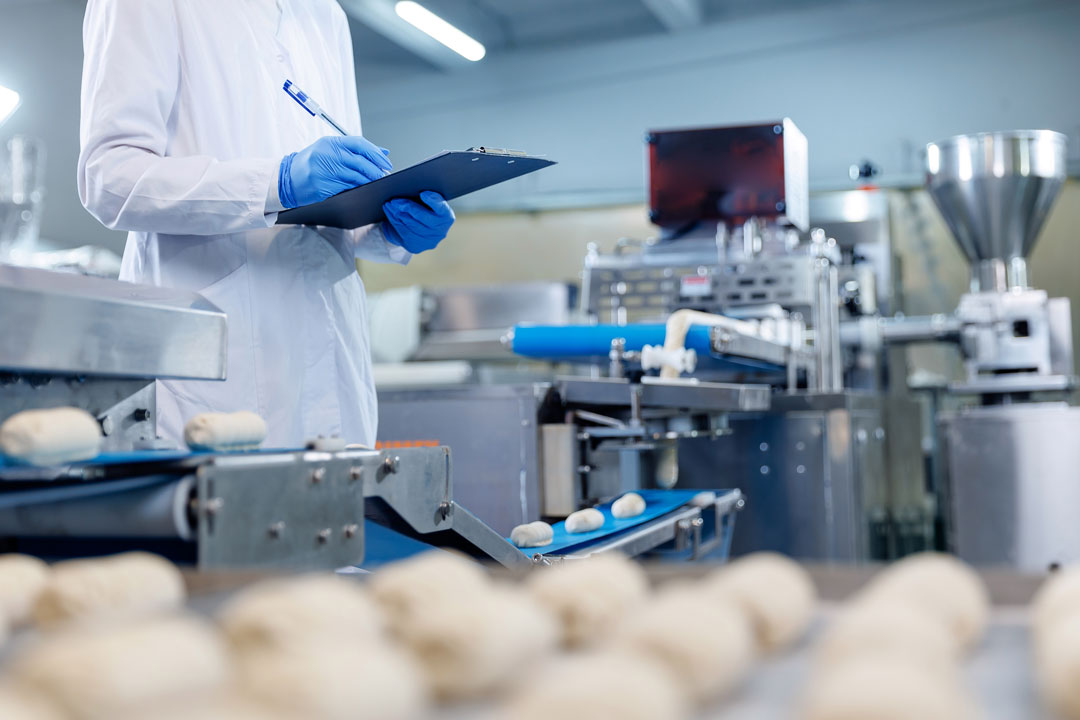
Energy Concept for Food Production in Germany
Sustainable Energy Concept for Process Heat and Process Cooling
One of the world’s leading confectionery manufacturers is expanding its production site with a new production line. The challenge: providing process heat and process cooling for highly sensitive production processes – economically, sustainably and within tight spatial and scheduling constraints.
Together with ZWP Ingenieur-AG, MorgenGrün developed an integrated energy concept combining waste heat recovery, renewable energy sources and intelligent system integration. On this basis, ZWP is responsible for the detailed design and implementation planning.
The site already has a well-developed energy infrastructure: combined heat and power (CHP) units, gas boilers, a chiller and HVAC systems supply the existing production lines. With the addition of the new production line, demand is increasing particularly for high-temperature process heat and low-temperature process cooling.
The key question was: How can the heating and cooling requirements of the new production line be met in a way that makes optimum use of renewable energy and waste heat while ensuring a reliable energy supply?
Site analysis: focus on geothermal energy and renewables
At the start of the project, MorgenGrün analysed the potential of various renewable energy sources at the site. Given the site-specific conditions, waste heat recovery and geothermal energy emerged as the most promising options.
As part of an options assessment, three geothermal solutions were evaluated: shallow geothermal energy using horizontal ground collectors, borehole heat exchangers and groundwater utilisation. The assessment showed that groundwater utilisation was the most technically and economically viable solution. Based on the projected flow rate and temperature differential, it could provide sufficient capacity for both heating in winter and cooling in summer.
Intelligent integration of waste heat recovery and heat pumps
The energy concept is based on the intelligent integration of process heat and process cooling. At the core is a heat pump that recovers waste heat from production processes and raises it to the required temperature level. The system is complemented by the integration of geothermal energy sources.
In winter, the heat pump primarily covers the heating demand while simultaneously providing process cooling. The existing gas boiler is used solely for peak-load coverage and redundancy. In the future, groundwater could also be integrated as an additional heat source, further reducing the use of fossil fuels.
The existing air-cooled chillers are used to provide low-temperature process cooling. In summer, process waste heat continues to be recovered by the heat pump and used to provide heat, while thermal energy storage decouples heat generation from demand over time. Here too, the future use of groundwater as an additional cooling source could reduce the role of the existing chiller to peak-load coverage and redundancy.
During the development phase, the team worked with various manufacturers to evaluate suitable heat pump systems. Key criteria included variable source and sink temperatures, efficiency, refrigerants, space requirements and capital expenditure.
Funding strategy for heat pumps and geothermal energy
MorgenGrün developed a detailed funding strategy. Two funding programmes are particularly relevant to the project:
1. BEG – Federal Funding for Efficient Buildings (Bundesförderung für effiziente Gebäude)
Funding is available for heat pumps, geothermal systems and solar thermal installations, among other technologies. The programme supports the implementation of energy-efficient energy supply solutions and helps to reduce investment costs.
2. EEW – Federal Funding for Energy and Resource Efficiency in Business (Module 2) (Energie- und Ressourceneffizienz in der Wirtschaft, Modul 2)
Depending on the measure, this programme offers higher funding rates and covers heat pumps, geothermal systems and thermal energy storage as well as feasibility studies, thereby supporting comprehensive energy-efficiency measures.
Economically viable decarbonisation of food production
The project demonstrates how process heat and process cooling can be intelligently integrated in the food industry. By harnessing synergies and enabling the future use of groundwater, the result is a future-proof energy concept that significantly reduces the use of fossil fuels while ensuring security of supply and economic viability.
From energy concept to implementation
The concept development phase provides the basis for subsequent detailed design. Further planning and implementation will be carried out by ZWP Ingenieur-AG, which was already involved in the project during the development of the energy concept.
Overview
Industry
Production facility
Project period
2025
MorgenGrün scope of services
Energy concept development, site analysis, geothermal energy, funding consultancy
ZWP scope of services
MEP design for the energy concept developed by MorgenGrün
Gross floor area (GFA)
approx. 40,000 m²
CO2 emissions savings
> 300 t/year
Final energy savings
2 GWh, equivalent to 75%