Bundeswehr Hospital, Berlin
From the Present to the Future: A Strategy for Efficiency and Climate Protection
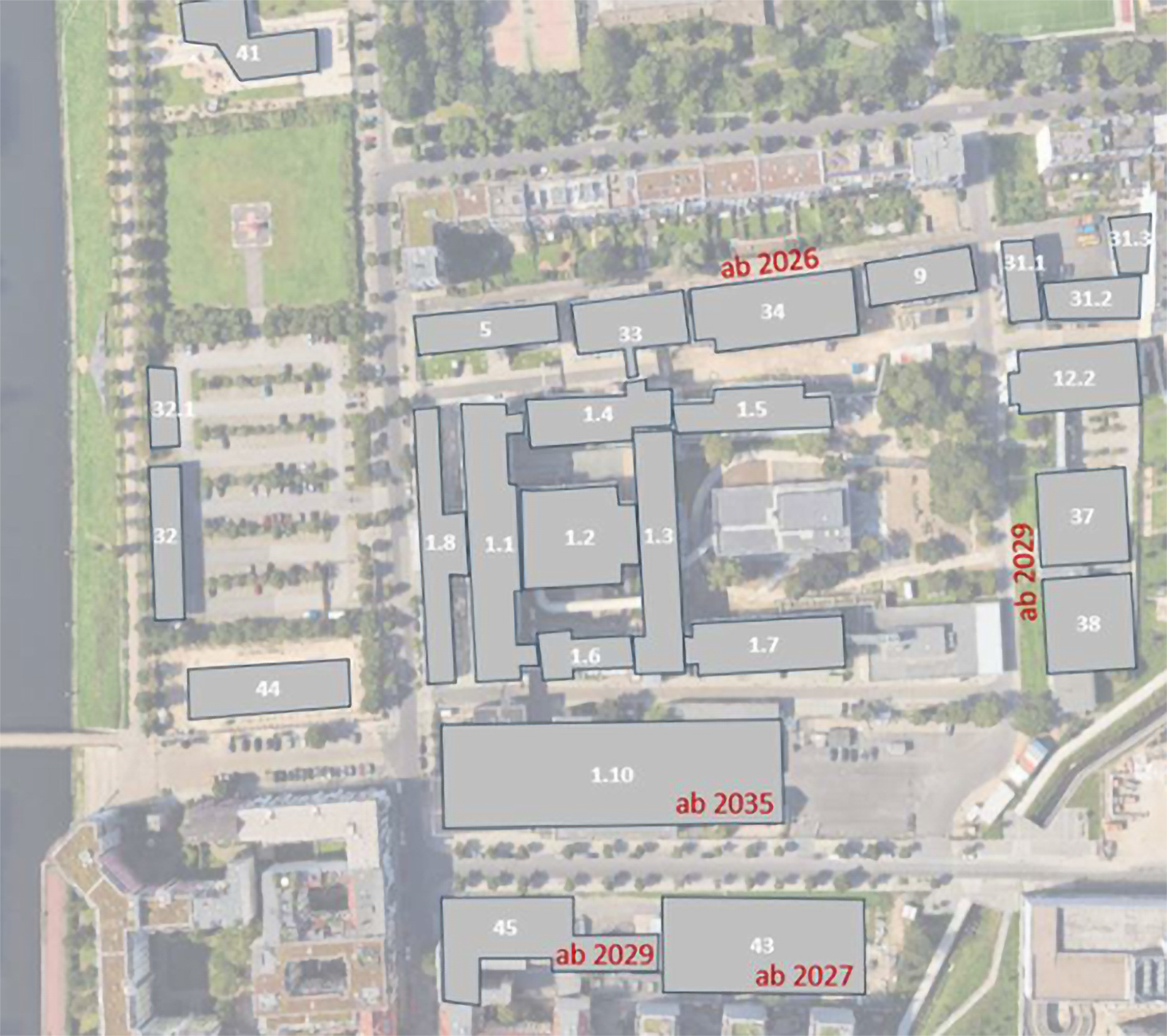
The Bundeswehr Hospital in Berlin comprises 37 buildings of varying ages and uses. As part of the technical target planning process, MorgenGrün was commissioned by the Bundesamt für Bauwesen und Raumordnung (BBR) to develop an overarching concept for the energy and technical development of the property. The aim was to create a supply strategy that is economically viable in the long term, environmentally effective and operationally robust.
Technical target planning and energy master plan
The project was based on a comprehensive survey of existing data, supplemented by scenarios regarding usage, energy requirements and supply options. On this basis, our team defined target values for efficiency, security of supply and sustainability – taking into account all relevant building services, from the building envelope and HVAC systems through to heating and cooling supply, electrical engineering and sanitary engineering.
Options and measurable impact
For the building envelope, we have developed bespoke renovation measures that enable compliance with the Efficiency Building 55 standard, despite the building’s listed status. In the field of ventilation and air conditioning, we have carried out individual assessments of more than 30 systems – with a potential saving of around 2.8 GWh per year and a payback period of less than seven years.
Combined heating and cooling system for climate protection
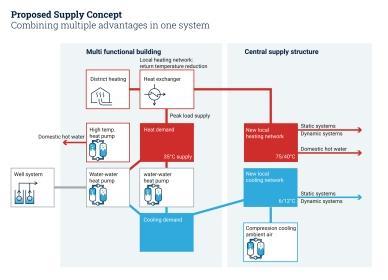
The heating and cooling supply concepts rely on a combination of district heating, large-scale central heat pumps and cooling generation, as well as combined heating and cooling. This approach significantly reduces the use of fossil fuels and is superior both economically and in terms of emissions to a system relying solely on district heating and central cooling.
Water and solar strategies
In the area of sanitary engineering, a comprehensive rainwater management plan has been developed, which includes the necessary retention capacity for heavy rainfall events as well as suitable site recommendations (heavy rainfall assessment). In addition, a water supply plan has been drawn up, defining the required connection capacities for the planned new buildings.
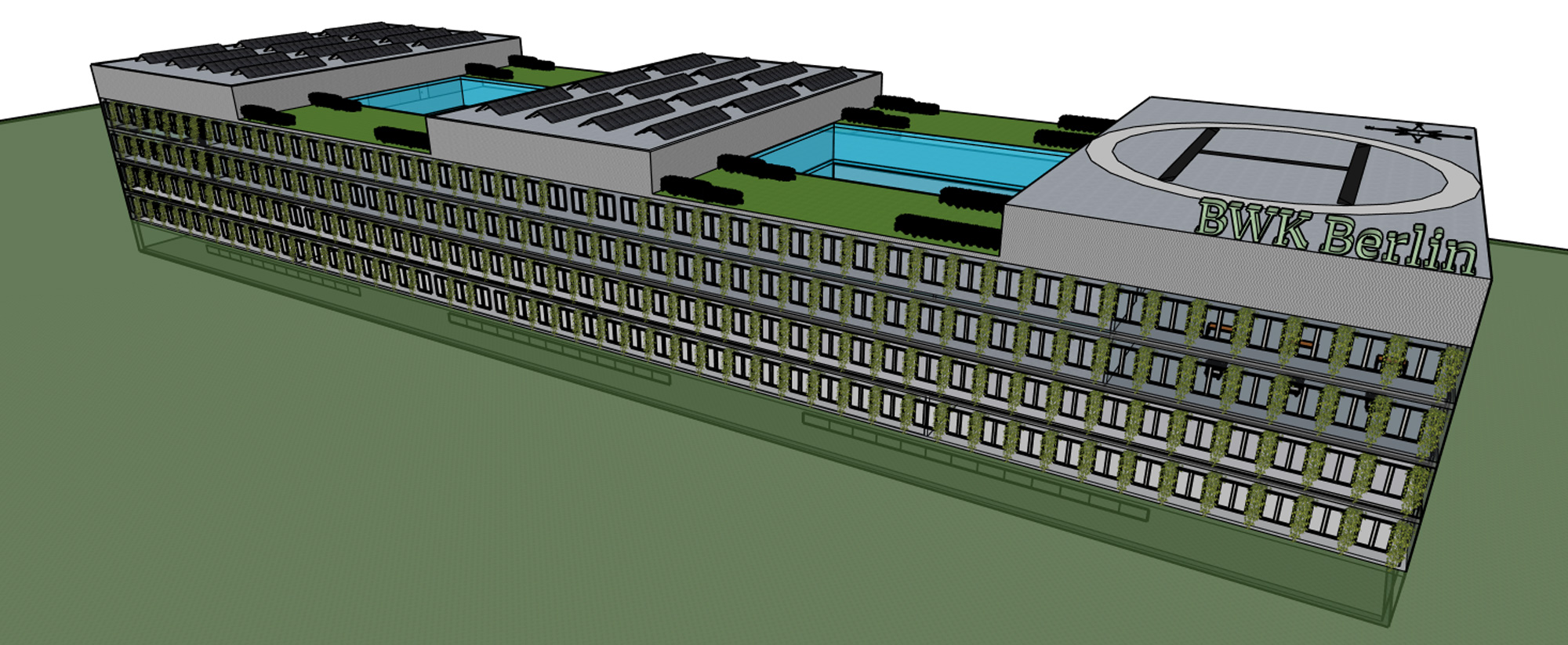
The overall plan is complemented by a photovoltaic system, the potential of which we have investigated through detailed simulations.
State-of-the-art electrical engineering
An analysis of the electrical infrastructure revealed weaknesses, particularly regarding compliance with standards and the separation of general and safety power supplies (general power supply/emergency power supply). Building on this, solutions were developed involving new emergency power generators (emergency power generator) and photovoltaic systems. The result: a safe, compliant and climate-friendly energy supply.
Planned together, clearly focused
MorgenGrün was responsible for the technical target planning and the energy masterplan it contained, whilst ZWP supplemented this with an electricity supply concept. The result is a strategic basis for decision-making that combines economic efficiency with climate-friendly benefits and can save around 608 tonnes of CO2 emissions per year. This ensures a secure long-term supply – technically robust, environmentally sound and geared towards future requirements.
Images: © MorgenGrün