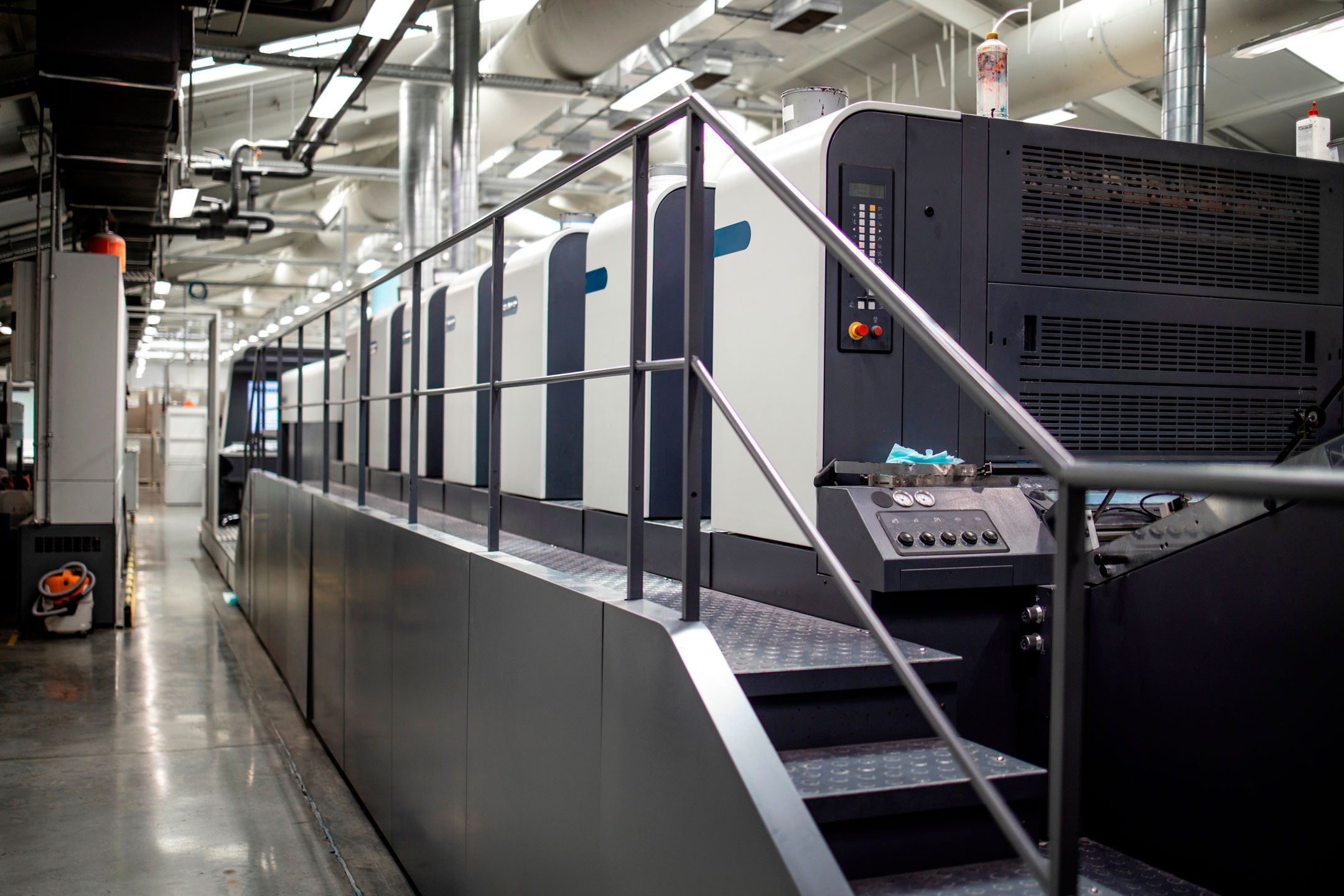
New Sustainable Printing Facility in North Carolina, USA
Printing & Packaging Group Develops Energy-Efficient Production Campus
The client, a global leader in the printing industry, is consolidating its dynamic growth in a new production campus for printing and packaging in North Carolina. The objective: maximum flexibility, the highest product quality, and an energy concept that combines economic efficiency with sustainability. MorgenGrün, together with FALCON concept solutions and GHB Architekten, developed an integrated site and energy concept for a forward-looking printing and packaging facility in the United States.
From growth driver to future hub of the printing industry
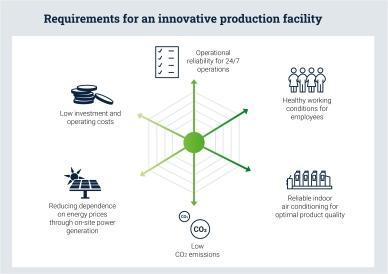
As part of its strong growth, the client is replacing several existing production sites with a new, high-performance printing and packaging facility in North Carolina. The requirements: state-of-the-art production processes, maximum operational reliability for 24/7 operations, optimum indoor air conditions for high-quality printing processes, and low life-cycle costs combined with ambitious sustainability targets.
Interdisciplinary thinking, jointly developed
At a very early project stage — going beyond the traditional HOAI service phase 1 — MorgenGrün, together with the project partners, developed a holistic concept for multiple production and warehouse buildings. In a multi-stage, workshop-based process, the project was advanced in an interdisciplinary manner, characterised by short decision-making paths, open exchange, and a clear objective: to deliver the best possible solution for a modern industrial printing site in the United States.
Process follows climate – efficient planning for the printing facility
The starting point was a detailed analysis of the site: infrastructure, climatic boundary conditions, and local potential were systematically evaluated. Building on this, MorgenGrün translated the process-driven zoning and machine layout into specific thermal requirements.
The results reflect the typical demands of a modern printing and packaging operation:
- large-scale storage areas with minimal heating and cooling requirements,
- highly sensitive production areas with precise temperature and humidity control,
- production zones with pollutant-laden exhaust air.
This differentiation forms the basis for a tailored and efficient energy concept.
Energy-efficient technology for the printing facility
Based on the needs analysis, MorgenGrün developed a tailored technical systems concept. Highly efficient air-handling systems with high heat recovery rates were specified for both contaminated and non-contaminated exhaust air—representing a key lever for reducing thermal energy demand.
A particular focus was placed on intelligent humidification and dehumidification technologies to reliably meet the stringent quality requirements of the printing industry.
Waste heat recovery in the printing facility: using energy intelligently
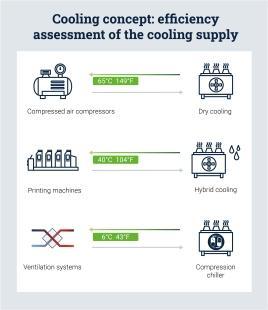
At the heart of the energy concept is the systematic integration of heating and cooling: waste heat from production machines, compressed air systems, and internal loads is specifically utilised to cover a large share of the heating demand. A campus-wide local heating network distributes the energy efficiently.
The result:
- significantly reduced energy consumption
- lower operating costs
- reduced CO2 emissions.
Innovative cooling concept for the printing facility
To meet the high cooling demands, MorgenGrün developed a three-stage temperature concept. The intelligent cascading of three distinct temperature levels maximises the use of free and hybrid cooling while optimising both energy consumption and investment costs.
Photovoltaics for the printing facility in North Carolina
In addition, MorgenGrün evaluated the photovoltaic potential: thanks to high levels of solar irradiation in North Carolina, the site offers strong potential for solar energy applications. The planned PV system in the double-digit megawatt range, combined with high electrical demand, enables nearly complete on-site consumption of the generated solar power.
A detailed economic analysis provides a solid basis for decision-making and supports a long-term, viable investment.
LEED certification for a sustainable printing facility
MorgenGrün also provided consulting on a potential LEED certification. Particularly in the »energy and atmosphere« category, the project offers excellent conditions for achieving a high rating—an important factor for sustainable industrial developments in the United States.
A sustainable printing facility as a model for the future
With the new production campus, the client is positioning itself as a benchmark for sustainable printing facilities and industrial production sites in the United States and internationally. The project demonstrates that economic efficiency, innovation, and sustainability can be successfully combined in the printing industry.
Image: © Adobe Stock: littlewolf1989 | MorgenGrün