Kienbaum – Olympic and Paralympic Training Centre for Germany, Grünheide
Moving Away From Natural Gas: The Decarbonisation Pathway in Clearly Defined Stages
How can a site with more than 20 existing buildings move away from fossil-fuel-based heating – without disrupting training operations and without a sudden surge in investment? For the Kienbaum Training Centre, we have reassessed our 2022 decarbonisation study in light of the constraints currently in place. The result: a phased transformation plan based on groundwater heat pumps, which reduces CO₂ emissions right from the first construction phase and makes further expansion feasible.
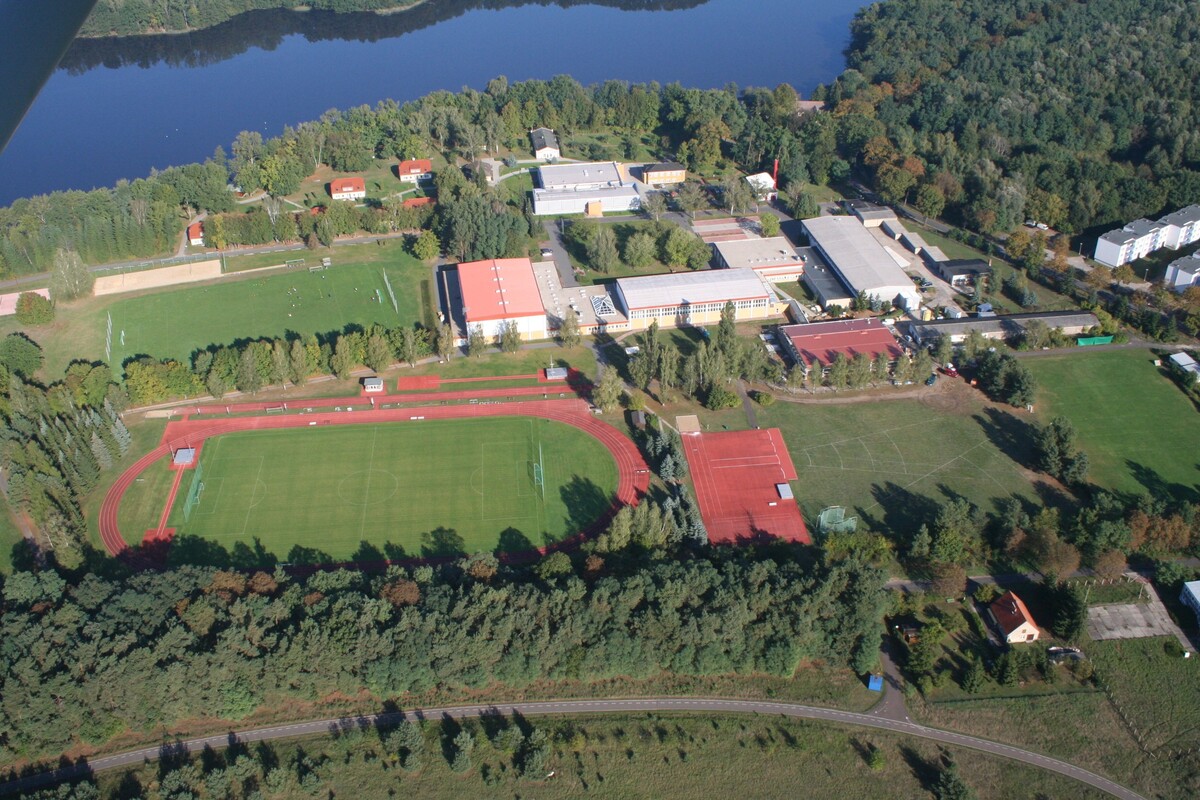
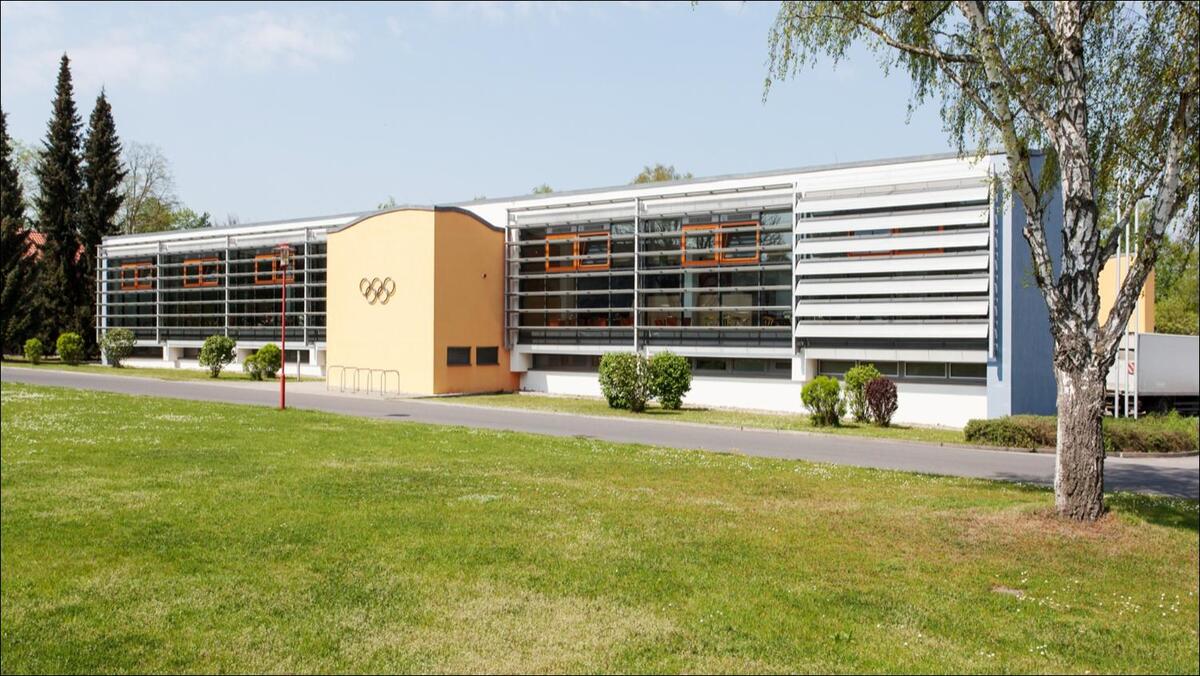
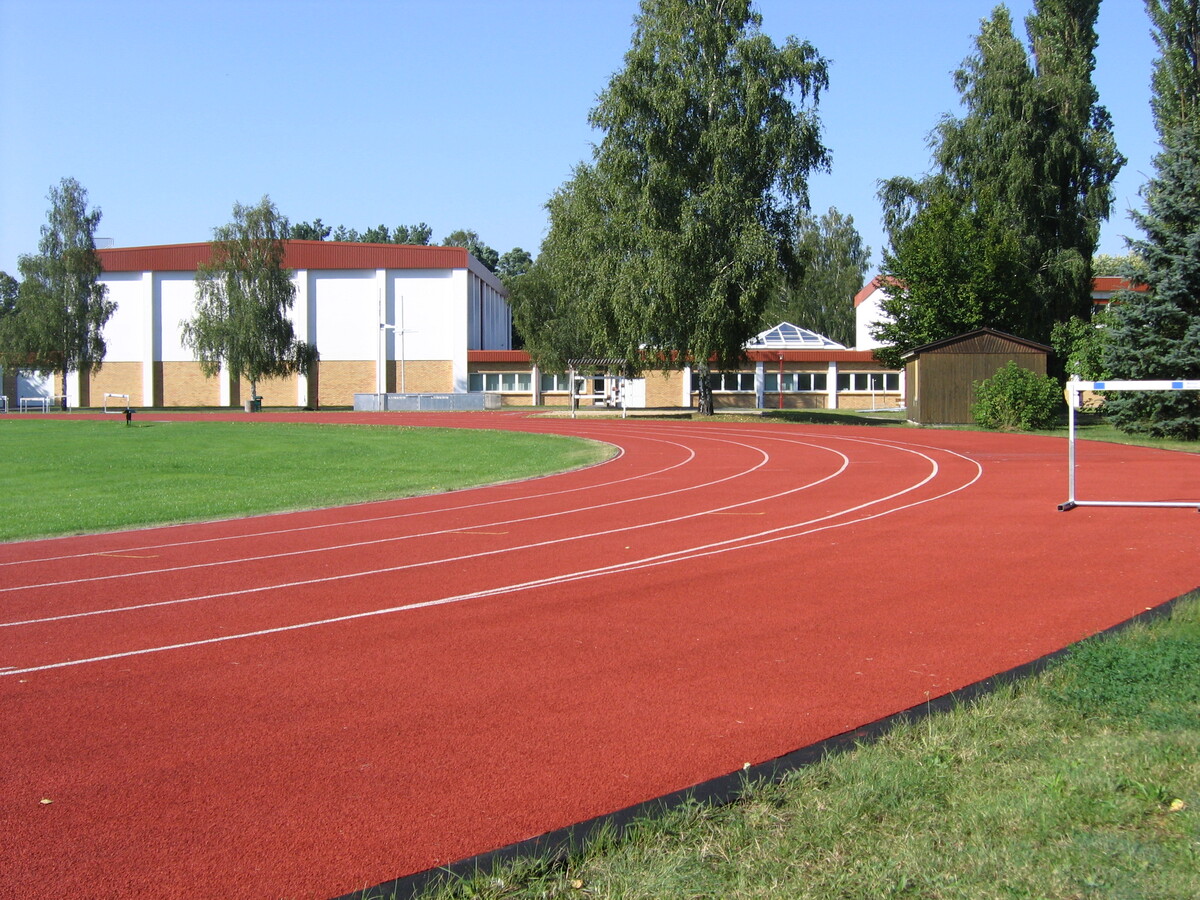
The Olympic and Paralympic Training Centre for Germany in the Brandenburg municipality of Grünheide, some 35 km east of Berlin, is unique in Germany. More than 20 sports, seminar, accommodation, catering and administrative buildings are spread across a park-like site surrounding Lake Liebenberg and are supplied with heat via two central heating plants. As early as 2022, MorgenGrün carried out a renovation study for the site with a view to achieving climate neutrality and recommended a monovalent groundwater water-to-water heat pump in combination with a large-scale photovoltaic system.
Background: changes in the framework conditions since the original study
Kienbaum is aiming to phase out the use of natural gas in order to achieve long-term security of supply and climate neutrality through a decarbonised energy supply. However, only part of the recommended plan has been implemented so far: Structural constraints, significant infrastructure requirements and the associated investment costs meant that, initially, only a ‘small’ photovoltaic system with a capacity of around 300 kWp was installed at the site.
At the same time, the energy-related conditions have shifted since 2022 – in particular due to reduced annual electricity demand and the significantly smaller PV system capacity. The aim was therefore to carry out an updated assessment of the originally developed concept in light of the changed framework conditions – and, building on this, to develop a bespoke, phased roadmap that breaks down decarbonisation into sensible and financially viable packages, whilst ensuring economic viability at every stage of expansion.
Methodology: Re-evaluation under current site conditions
For the updated study, we selected the most suitable supply concepts from the original study and resimulated them under current site conditions. In order to provide a nuanced picture of future developments, the measures were divided into sensible expansion phases and the remaining PV expansion potential was taken into account.
The energy assessment of the options was carried out along two lines: firstly, based on the existing installation (existing PV capacity), and secondly, based on the next feasible expansion stage (PV potential). This allows for a reliable evaluation of the actual added value that further PV expansion generates for the efficiency of the overall system – and the order in which heat generation, electricity generation and storage should be integrated.
Conclusion: The groundwater heat pump remains the preferred option
The reassessment confirms the general direction of the original study: due to its efficiency benefits and significantly lower noise emissions, the groundwater heat pump remains at the heart of the supply concept. What is new is the implementation approach – the overall conversion is divided into clearly defined construction phases and development stages. The process will begin with the larger Kienbaum East sub-area, which will be converted in stages.
The transformation plan for Kienbaum East
Phase 1
Introduction to renewable heat generation: bivalent operation of a 500 kW groundwater heat pump in parallel with the existing gas boiler, decommissioning of the CHP units and installation of a 220 kWp photovoltaic system. The site is thus transitioning to electrified heat generation without compromising security of supply – and this single measure alone reduces CO₂ emissions across the entire site, i.e. Kienbaum East and West combined, by just under 50 per cent.
Phase 2
Complete replacement of fossil fuel-based generation: decommissioning of the remaining gas-fired boilers, upgrading the heat pump capacity by a further 750 kW to a total of 1,250 kW, converting the heating network to operate at low temperatures, and installing a 70 kWh battery storage system. Lowering the network temperatures significantly increases the efficiency of the heat pumps.
Phase 3
Maximising the potential for on-site electricity generation: expanding the photovoltaic capacity by the remaining 240 kWp to a total of 760 kWp, supplemented by a corresponding expansion of the battery storage system to 210 kWh. This ensures that heat generation and the use of self-generated electricity are integrated as effectively as possible. Once the conversion of Kienbaum East is complete, around 70 per cent of the site’s total emissions will be avoided – approximately 1,000 tonnes of CO₂ per year.
Added value for the client
The study provides a sound basis for decision-making regarding the site’s next phase of expansion, which is imminent. Rather than a single, capital-intensive, comprehensive measure, a series of sequential steps is being developed, each of which can be financed individually and implemented whilst operations continue – each step reduces natural gas consumption without jeopardising the security of supply for training operations.
Future prospects: A blueprint for Kienbaum West
The conversion of Kienbaum East also serves as a model for the second site area, Kienbaum West. The conceptual framework, implementation phases and operational experience gained from the first construction phase can be applied there – thereby transforming a single project into a replicable decarbonisation roadmap for the entire site.
Images: © Kienbaum – Olympisches und Paralympisches Trainingszentrum für Deutschland e.V.
Overview
Building Owner | Client
Kienbaum – Olympisches und Paralympisches Trainingszentrum für Deutschland e.V., Grünheide
MorgenGrün Project Period
2022 to 2023 (decarbonisation of the energy supply)
2026 (updated analysis of options)
MorgenGrün Scope of Services
Thermal insulation and energy balancing, climate-neutral energy concept, updated assessment of supply options including a phased development and construction plan
ZWP Scope of Services
Planning and site supervision of the transition of the heating and electricity supply to renewable energy sources
Property Area
approx. 50 hectars
CO2 Emissions Savings
approx. 1,000 t/m²a – following the complete conversion of Kienbaum East (approx. 70 per cent of the site’s total emissions)