Restoration of a Listed Building: The Bruno Hall of the Catholic Parish of St Bruno, Cologne
How Modern Climate Protection and Historic Architecture Come Together Successfully in Cologne’s Brunosaal
On behalf of the Catholic parish of St Bruno, MorgenGrün developed a decarbonisation and refurbishment plan for the listed Brunosaal in Cologne. The aim was to make the historic building complex energy-efficient for the future, whilst consistently taking into account the requirements of heritage conservation.
Restoration of a listed building with a vision for the future
The complex of buildings on Cologne’s Klettenberggürtel comprises an event hall with a capacity of up to 458 people, a stage house and a foyer, as well as adjoining residential areas and a playroom for toddlers. As the buildings date from different construction phases and have been listed as historic monuments since 1983, the energy-efficiency refurbishment posed particular challenges in terms of planning and implementation.
The aim of the project was to ensure the long-term operational viability of the complex, to identify energy-related and technical weaknesses, and to develop cost-effective refurbishment measures for the building envelope, building services and energy supply.
A comprehensive analysis of the current situation as the basis for planning
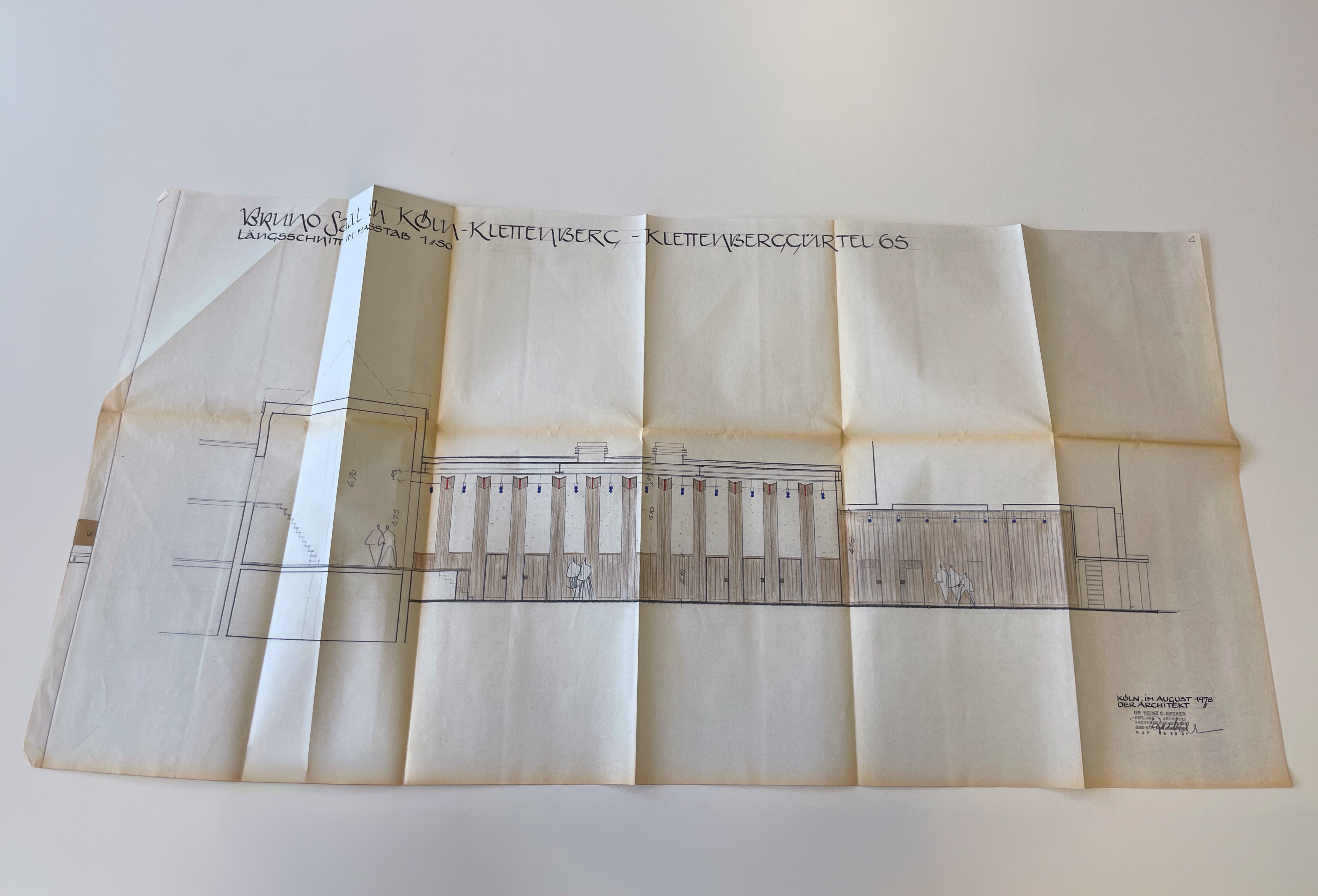
The project began with a detailed survey, an analysis of historical planning documents from the archives of the Archdiocese of Cologne, and a site visit. In addition, MorgenGrün created a three-dimensional building model to accurately capture the complex geometry of the building.
On this basis, the engineers assessed the thermal performance of the building envelope, analysed the existing building services systems and modelled heat consumption and heat demand.
Decarbonisation despite heritage protection
One key focus was on the transformation of the fossil fuel-based heating supply. The auditorium is currently heated by an oil-fired hot-air heating system; the stage area, foyer and catering area are heated by an oil-fired hot-water heating system.
MorgenGrün investigated various energy sources and identified the combination of ambient air and an air-to-water heat pump as the most economically and technically viable solution for future heating and cooling.
In addition, the photovoltaic potential of the south-west-facing roof areas was assessed. An installed capacity of around 16 kWp would be possible, with an expected annual yield of approximately 15 MWh/year.
Improving indoor air quality and energy efficiency
In addition, MorgenGrün analysed measures to improve indoor air quality, reduce heating requirements and ensure compliance with future requirements for the building’s use as a meeting venue.
A comprehensive refurbishment plan with a significant reduction in CO2 emissions
Obtaining planning permission for the site to be used as a meeting venue posed a particular challenge, as did the technical infrastructure that had evolved over time.
As a result, MorgenGrün recommends a holistically coordinated refurbishment of the building envelope, carried out in accordance with heritage conservation principles, combined with a modern ventilation and air-conditioning system, heat pump technology and optional photovoltaic panels. In doing so, cost-effectiveness, eligibility for funding, heritage protection and technical benefits were all given equal consideration.
Implementing this concept will reduce annual CO2 emissions from 26 to around five tonnes as early as the first year of operation. With the increasing share of renewable energy in the German electricity mix, the building can be operated in a virtually climate-neutral manner in the long term.
Image: © MorgenGrün